
The Supply ChainMembers
A country addicted to racial and economic supremacy, at odds with itself because immigration exposes the conflict. We have an immigration problem because immigrants solve a more fundamental one: our addiction to low-wage labor.
Join to read →
The ExhaustionMembers
We built this together — all of us — and they are putting it up for sale for a smaller, more violent version of itself. This is why Black people are so tired. Not from the hatred. From the obviousness of it.
Join to read →
The Current TheaterMembers
The farm-raid pause that revealed everything. A $150 billion enforcement bill with zero E-Verify. Private-prison stocks up 42% on election night. The border deal killed to preserve the crisis.
Join to read →
The PatternMembers
144 years. Chinese, Irish, Italian, Mexican, Central American — the same play, different cast. The Bracero Program as America’s confession. 11 employers prosecuted a year, against 125,000 workers.
Join to read →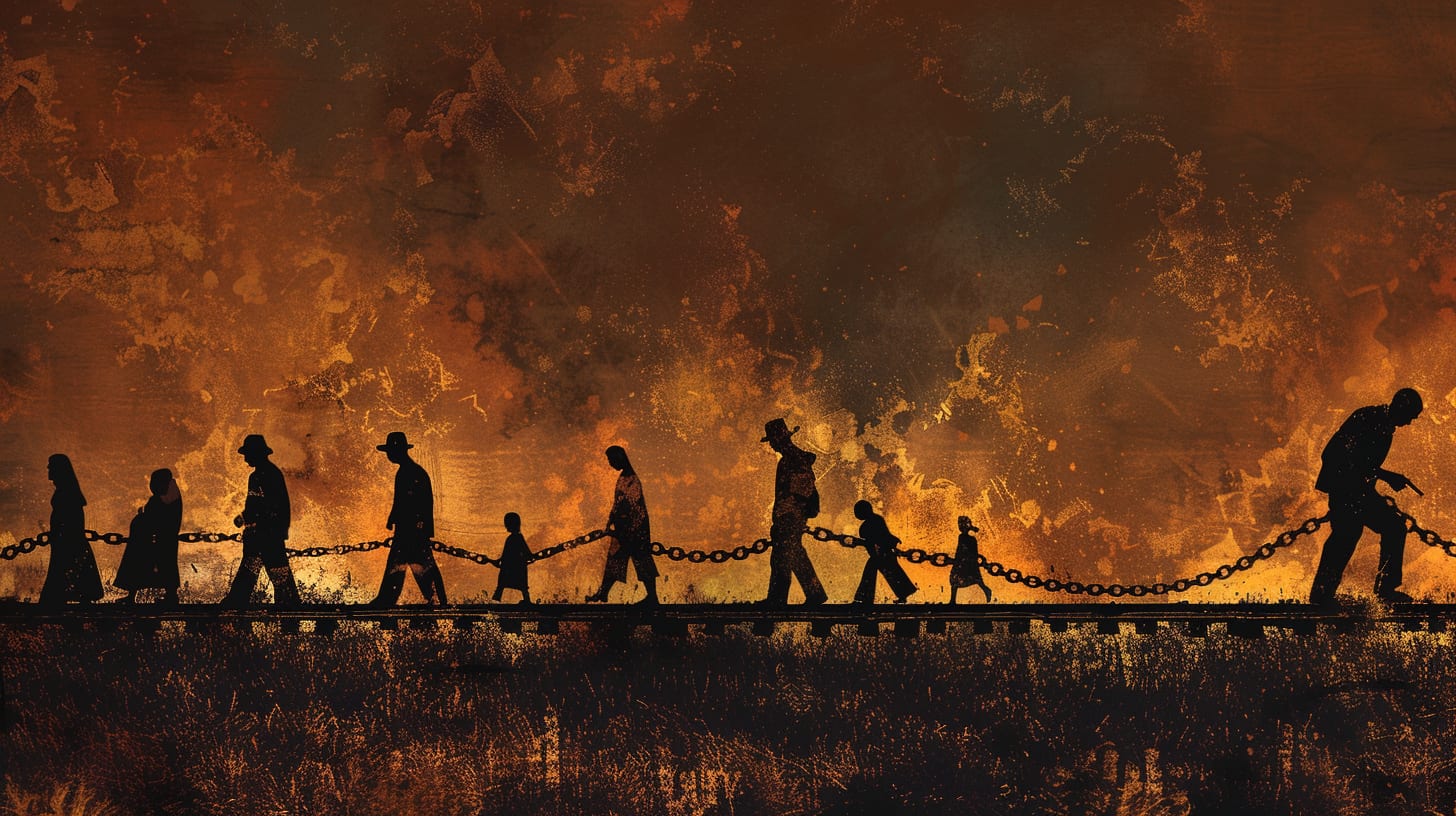
The Origin DocumentMembers
Slavery is not a metaphor for immigration. It is immigration policy — the first imported labor force. No wages, no citizenship, no path to permanence. And what happened when the paperwork changed but the system did not.
Join to read →
The Opening QuestionMembers
Would you trust someone you believed inferior with your children, your home, your food, your nation? No. So explain to me why you did — and why you built an entire economy on the answer.
Join to read →
The Maternity Crash
I argued for universal health care for twenty years on the grounds that it was the decent thing to do. Watching this administration take the instruments apart showed me the argument I should have been making — about who actually holds the risk, what changed in 1990, and how far it has already gone.

The Evidence
Every claim has a number behind it. Reach decay, pay gaps, ad fraud, healthcare AI bias — the data.

The Suppression Files
I paid $80 to boost a post. The organic post outperformed it by 37%. I paid for audience degradation.

What We Built Instead
If the platforms will not distribute your work fairly, build your own distribution. Labora Collective. Yemaya. The Codex.

The Algorithmic Tax
The communities that built these platforms are the ones now paying to reach the audiences they made. How social media extracts wealth from the people who generate it — part one of four.

The Bottle Station
Twins, day one postpartum. Severe preeclampsia, the magnesium about to come down. And a conversation about a bottle-washing station that, in the absence of any system at all, is the system she is going home to.

The Recovery Period Itself
The six-week visit is the one that catches the postpartum hypertension, the postpartum depression, the diabetes screen she cannot afford to miss. A line in a federal budget becomes a closed daycare becomes the visit that never happens.

More True and More False
An honest accounting of the documented record — between facts too terrible to credit and conspiracies too easy to dismiss.

Infrastructure We Call a Luxury
America treats childcare as a private luxury. The workforce underneath it — the one that depends on women returning to work — is built on exactly the opposite assumption.

They Knew. And They Didn't Care.
Names, dates, and the documented relationships of current U.S. officeholders to a convicted sex trafficker.

You Don't Need a Cabal. You Just Need a World That Doesn't Care.
The Epstein case is not an aberration. It is the ordinary functioning of power when it does not fear consequences.

Stop Doing Pedophile Math
Stop letting clinical terms become an escape route for abusing children.

The Dog That Hasn't Barked
A clinician's read on the documented record of Donald Trump's proximity to Jeffrey Epstein's operation — what is established, what is inferred, and what nobody has explained. Part one of Proximity and Awareness.

Found Liable
Not allegations — findings. The cases against Donald Trump that the courts have already adjudicated. Part two of Proximity and Awareness.

They Are Girls. And They Were Treated Like Currency.
What the January 2026 DOJ release actually showed — and what we keep refusing to look at.

Insurance on Paper
When the enhanced Premium Tax Credits expired on December 31, 2025, the marketplace plan became a card she still carries — and a set of appointments she will no longer keep.

The Day I Bought HerFree
Day two postpartum. Blood pressures still creeping, no safe place to go home to — and a discharge I held back by one day, against the unit's own clock.
Sign in to read →
Housing Crisis — The Cortisol PipelineFree
When the address is unstable, the placenta does what placentas do under chronic cortisol load. The path runs from eviction filing to preterm birth, and the discharge sheet has no row for it.
Sign in to read →
Housing CrisisFree
Housing is healthcare. A stable, secure place to live is a prerequisite for a healthy pregnancy — and this patient's most dangerous exposure never made it onto the monitor.
Sign in to read →
The Card That Just Kicked In
Four clinics in six weeks. A beta-hCG that should have triggered a methotrexate order a month earlier. And a Medicaid card that finally activated the week she arrived in the ED.

The Midwife Purge, 1900–1930
Between 1900 and 1930, state law and the new American medical establishment drove Black, immigrant, and rural midwives out of practice. The Sheppard-Towner Act (1921) funded the 'education' that displaced them. The workforce collapse in maternal care that defines 2026 begins here.

March to the Beat of Her Own Drum
Dr. Connor on raising a four-year-old who already knows who she is — and on what it costs a Black girl to keep that certainty in rooms built to take it from her.

Mastitis Is Not Just a Clogged Duct
What every breastfeeding parent should know about mastitis — when it happens, why, what treatment really looks like, when to call your doctor, and what urgent care and ERs often miss.

Why Are Black Women Dying of Endometrial Cancer at Twice the Rate of White Women?Members
Uterine cancer is the most common gynecologic malignancy in the US and its incidence is rising. Black women face the worst outcomes — and the screening standards, treatment gaps and trial representation behind that are decisions, not biology.
Join to read →
They Called the Freezer a NurseryFree
In LePage v. Center for Reproductive Medicine (Feb 2024), the Alabama Supreme Court held that frozen embryos are children under the state's Wrongful Death of a Minor Act. Within days, three of Alabama's largest IVF providers halted treatment — the ruling protected no embryo and shut down the medicine that creates them.
Sign in to read →
Kicking Away the Ladder
Economic mobility was supposed to be the shield against bad health outcomes. This is what happens to maternal death when the ladder is deliberately kicked away — and why the death rate is the canary.

The Fever I Almost Sat With
A Black physician — in a city, with private doctors and good insurance — sitting on her own postpartum fever of one hundred and three degrees, telling herself she was just engorged. And what that hour taught her about the patient she discharges today.

The Bargain That No Longer Holds
For two generations the public-health bargain was that income and education would buy a Black woman a safer pregnancy. In 2026 that bargain is being unwound, and the obstetric chart is the first place it shows.

She Did Everything RightFree
The ACA made maternity and newborn care an essential benefit every marketplace plan had to cover, and barred insurers from turning women away. This is the patient who did everything right — and the morning the subsidies expired.
Sign in to read →
When the Hospital Has to Choose Between You and Prison
Idaho's Defense of Life Act permits abortion only to prevent the mother's death, while federal EMTALA requires hospitals to stabilize any emergency, forcing physicians to wait until a pregnant patient is dying before acting. In Moyle v. United States (2024) the Supreme Court dismissed the case as improvidently granted, resolving nothing; St. Luke's airlifted six pregnant patients out of state in early 2024 alone.

The Zombie Statute They're Bringing Back
The Comstock Act of 1873, an unrepealed federal law criminalizing the mailing of material deemed obscene, including abortion drugs, is being positioned as the administrative mechanism to ban abortion pills nationwide without Congress or the courts. Project 2025 urges the DOJ to enforce it against mailed mifepristone; a December 2022 OLC memo currently limits it, and its rescission is the trigger.

You Could Be As Great As You Think You Are
A Fourth of July essay on the American promise — and the one thing no dominant people in history has ever done: share power freely. What real greatness would actually cost, and why the case for it is overwhelming.

Gratitude in the MarginsMembers
Nine voices across three continents, writing from a holiday call shift. The founder on what it costs to build a still self-funded company committed to changing women's health, and eight teammates on what the work means to them — and on why doing the right thing still matters when the world no longer rewards it.
Join to read →
Viva VoceMembers
People ask me all the time — why isn’t healthcare different? Why is there no innovation? Why do we keep doing things the same way? The honest answer is because it’s hard. It’s really, really hard. It’s hard and incredibly expensive. It’s time-consuming and stressful. It carries enormous liability and a very high risk of failure.
Join to read →
Building the CodexMembers
A finite, ownable collection that fills as you complete deep, goal-mapped content — turning the time you spend learning into visible proof of what you know. Collector psychology, not gamification: each Codex completes, and then the next one begins.
Join to read →
We're Rebuilding: A Behind the ScenesMembers
A behind-the-scenes note on the Labora Collective rebuild: over the next few days, pages, fonts, and designs may shift across our publications as we unify the visual identity and reorganize the ecosystem. This isn’t an error — it’s a transition, and instead of going silent we chose to keep publishing.
Join to read →
Why I Can Say ThisMembers
There is no ready-made archetype that makes a Black woman MD/PhD founder building emergency obstetrical infrastructure legible to funders and partners — so people improvise unflattering ones. Radical transparency is the answer: an asset that cannot be described cannot be valued.
Join to read →
Balance Isn’t a DestinationMembers
Balance as a daily negotiation rather than a destination. A year of leading a team, mothering, and building while carrying the extra weight the world assigns Black women — and why clarity is kindness, boundaries are structure, and nothing lasting gets built from constant depletion.
Join to read →
Founder’s StatementMembers
Why Dr. Yamicia Connor founded Diosa Ara, and how post-Dobbs restrictions — from the Zurawski ruling in Texas to the EMTALA fight in Idaho — are endangering pregnant women. The medical case that abortion access is essential to safe pregnancy care.
Join to read →
We Can Read Too
An engineer, then scientist, then physician explains why a medical-intelligence project reaches back a hundred and fifty years. History resolves what the legal, medical and cultural lenses cannot: the present is a pattern, not an accident.

Your Pregnancy Is Subpoenaed
The 2024 HIPAA rule that shielded reproductive-care records from out-of-state subpoenas was quietly vacated nationwide in Purl v. HHS, restoring a default framework in which any patient's prenatal, miscarriage, or pharmacy records can be pulled by a hostile prosecutor. The federal privacy floor is gone; the records infrastructure for criminalization is now exposed.

Comstock, 1873
The federal anti-vice law of 1873 made it a felony to mail contraceptives or 'obscene' medical information. Margaret Sanger was arrested under it. It is still on the books. It is being weaponized to ban mifepristone by mail without a vote of Congress.

The Team Was ThereFree
A fourth cesarean. A failed spinal converted to general anesthesia. A thin lower-uterine segment and five hundred milliliters of blood. Three people in the room who knew exactly what to do.
Sign in to read →
The Fugitive Slave Act, Now With Mifepristone
In 2025 Louisiana criminally indicted Dr. Margaret Carpenter, a New York physician, for a telehealth prescription that was legal where she practiced — the first cross-state criminal prosecution of an abortion provider since Dobbs. New York refused extradition; the case is the template built to gut every shield law in the country.

The Twelve-Year Pipeline and the Levers We Still HaveFree
The OB-GYN who would have practiced in Idaho in 2032 did not match into an Idaho residency in 2024. A single calendar year of state law produced that fact — and 116 rural L&D closures run on the same arithmetic.
Sign in to read →
The OB/GYNs Are Leaving. The Replacements Aren't Coming.Free
A maternal health system does not run on funding and buildings. It runs on specialists — and legal risk and criminalization are driving them out of ban states faster than anyone is replacing them.
Sign in to read →
The Bounty State
Texas HB 7 (2025) takes the SB 8 civil-bounty design — private lawsuits in place of state enforcement, to dodge constitutional review — and extends it across state lines. Any citizen can sue anyone who supplies abortion medication to a Texan for a minimum of $100,000, with no cap and no standing requirement.

The Surgery She Needs AfterFree
A fifth pregnancy, four children at home, a bladder prolapse that will need surgical repair, chronic hypertension — and a Medicaid coverage window that closes before the surgery can be scheduled.
Sign in to read →
What Happens When You Cap the Payer of Last ResortFree
Medicaid covers forty-one percent of all U.S. births, sixty-four percent of births to Black mothers, and forty-seven percent of rural births. The OBBBA takes nine hundred billion dollars out of it.
Sign in to read →
The Program Holding Up the Whole FloorFree
Medicaid pays for roughly forty percent of all births in this country. Nobody is repealing it — procedural unenrollment is hollowing it out one renewal form at a time.
Sign in to read →
Tricare for All: We Already Have the Answer
The United States spends more on healthcare than any nation on earth and gets the worst outcomes among wealthy nations. That is not a mystery requiring a task force — it is a program any competent operator would shut down on sight. And the universal system America already built proves the answer exists.

You Cannot Solve What You Are Not Allowed To Name
In 2024 Black women died of pregnancy-related causes at 3.15× the white rate. In 2025, Executive Order 14151 and the HHS communications pause triggered the largest scrub of federal health data in modern history — shutting down PRAMS mid-survey and gutting the CDC reproductive- and minority-health offices that count those deaths.

The Taper She Could Not FillFree
Three nights admitted for acute heavy bleeding, an IV estrogen drip with a partial response, a transfusion — and a discharge prescription that in 2026 is not really a prescription anymore. It is a question.
Sign in to read →
The Three Pharmacies That Decide Whether You Get Your MedicationFree
For forty years the corporate pharmacy infrastructure absorbed the medication-access risk of American obstetrics. Post-Dobbs, three chains have decided that risk now belongs to the patient.
Sign in to read →
Your Doctor Wrote the Prescription. The Pharmacist Said No.Free
The retail pharmacy is the last node in the reproductive healthcare system — the one standing between a valid prescription and the medication in your hand. The chains are becoming the new gatekeepers.
Sign in to read →
Where The Sepsis Wards Came Back
What the laws and rulings actually do to bodies — and where the sepsis wards came back. The medical track of Crisis to Care.

The Drug That Should Be AnywhereFree
Twenty-nine weeks, blood pressures in the two-hundreds, vessels so constricted no one could place a line — and the one drug whose entire point is that it can be reached anywhere in the world was not in the building.
Sign in to read →
The Empty Code Cart, and the Empty Pharmacy Behind ItFree
When the obstetric code cart is empty, the patient who would have survived a postpartum hemorrhage twenty years ago does not survive one today. The empty cart is not an accident.
Sign in to read →
The L&D Code Cart Is EmptyFree
Obstetric drug shortages are creating life-threatening gaps in hemorrhage and seizure protocols. Oxytocin, misoprostol, magnesium sulfate—cheap generics that prevent maternal death—are vanishing from hospital code carts while regulators track national output, not bedside reality.
Sign in to read →
What Pro-Life Forgot
On the natural-law tradition the religious right buried, and what it would mean to bring it back.

The Watching Is the CareFree
In obstetrics, surveillance is the intervention. When we lose PRAMS, we lose the structural context of the patient in the room. The watching is the care.
Sign in to read →
Either You Marry Your Brother, Or You Don't Vote — H.R. 22 (the SAVE Act)
H.R. 22, the SAVE Act — passed by the U.S. House and pending in the Senate — requires documentary proof of citizenship to register to vote. Because a birth certificate rarely matches a married-name ID, the requirement lands on roughly 69 million married women, throttling turnout without banning a single voter.

The Boondoggle in the BasementFree
How PRAMS is being killed without ever being killed: funding intact, paperwork in motion, the people removed. The timeline from January 2025 to May 2026, the parallel erasures across the federal building, and how Labora is surveilling maternal health without it.
Sign in to read →
Why They Came for PRAMSFree
Why would Congress defund the only system that asks mothers why they did not get care? Because the data creates liability. PRAMS tracks the upstream failures, and defunding it severs the causal link.
Sign in to read →
No One Signed the Death CertificateFree
The CDC PRAMS team has been on administrative leave for thirteen months; the 2023 dataset was finished and never released; the state grants expired April 30. Action through omission — the same playbook as Title X, applied to America’s only maternal-experience surveillance system.
Sign in to read →
The Tubal She ChoseFree
The morning after a postpartum tubal ligation, a 42-year-old patient explains she chose permanence because she no longer trusts that contraception will be reliably available. The federal sterilization rule written to protect women from coercion now helps push them toward it. The decision was hers; the context was not.
Sign in to read →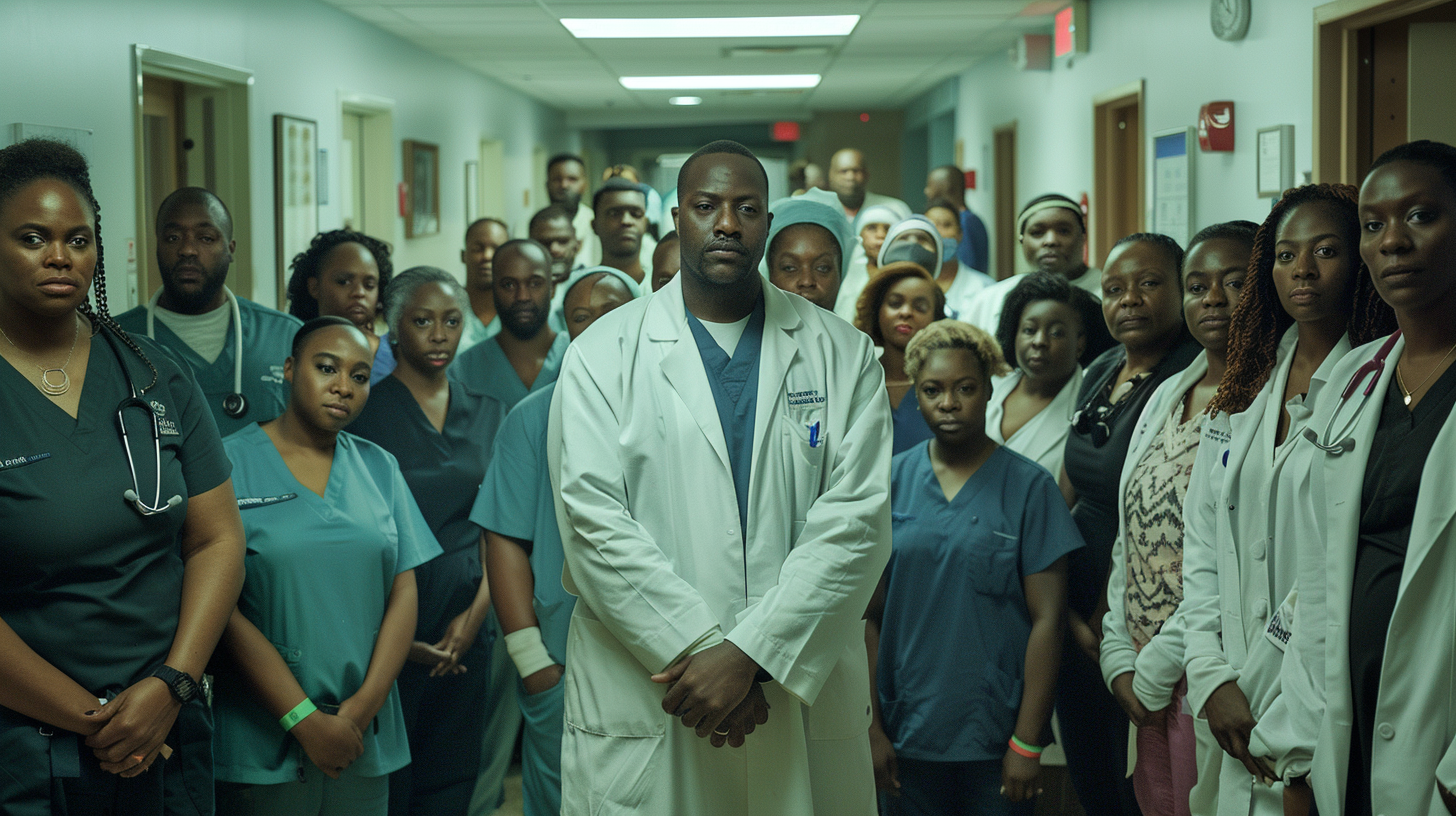
Title X Is Being Dissolved Without a VoteFree
Title X — the only federal family-planning program — is being dissolved without a repeal vote: the administering office cut from ~50 staff to one, the FY2027 mission rewritten from contraception to "fertility awareness," and funding routed toward Crisis Pregnancy Centers. A clinical case opens the pattern; the House markup on June 5 is the next inflection point.
Sign in to read →
What the Lawyers KnowFree
Administrative starvation: how you dismantle a program without repealing it — hollow out the office, squeeze the money, reinterpret who qualifies. Title X is the case study, the 2019 gag rule is the receipt, and three statutory counters exist that nobody has pulled.
Sign in to read →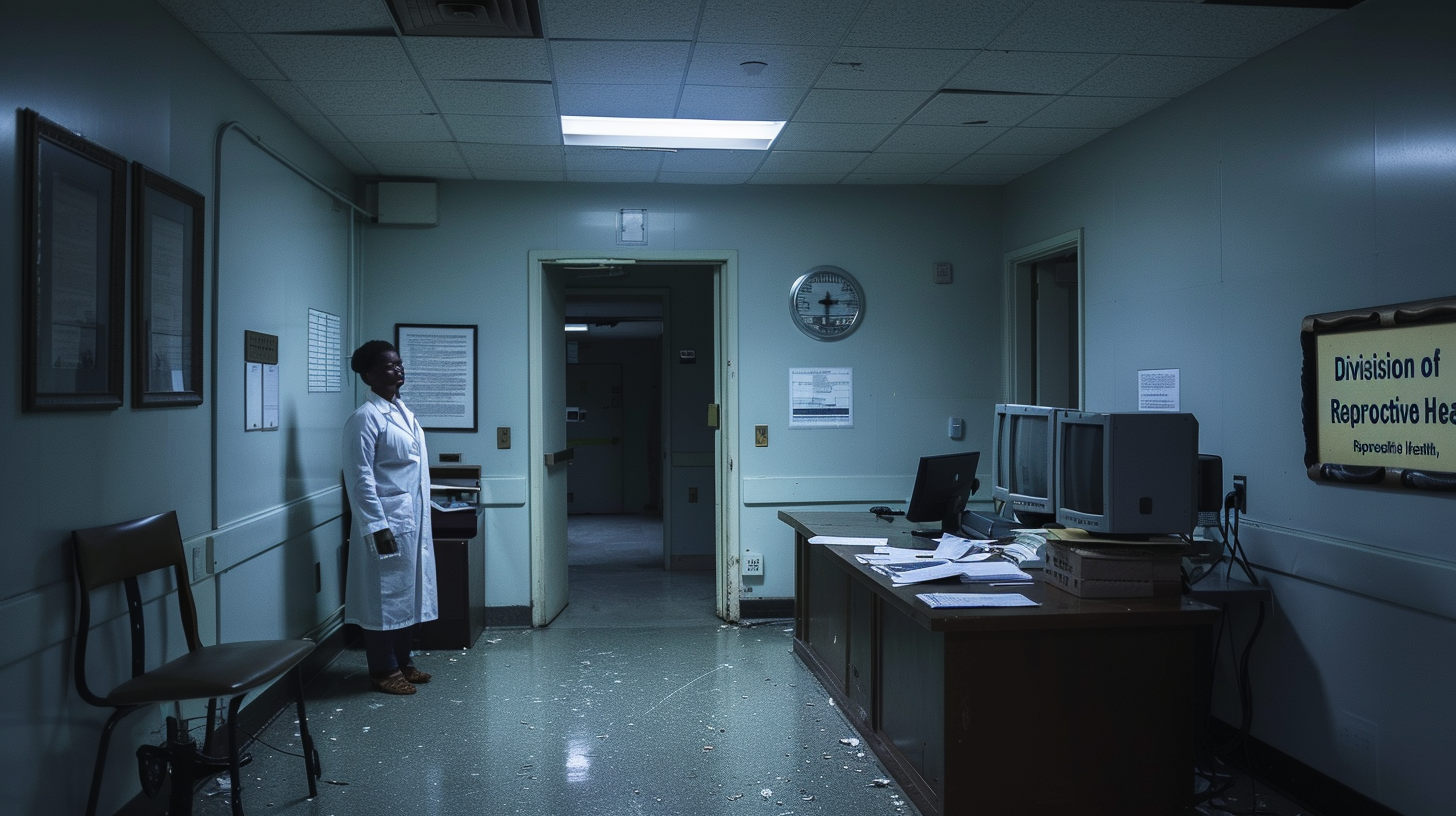
The Republican Manufactured Healthcare Crisis
It is 2026. They took it. The four phases of how American women's health was deliberately dismantled. Texas maternal mortality up 56% — white women up 95%. The ban states are killing the women who voted for the bans.

Take The Word Back
Lionel Trilling wrote in 1950 that American conservatism expressed itself not in ideas but in irritable mental gestures seeking to resemble them. William F. Buckley founded National Review in 1955 to manufacture a tradition, expelling the John Birch Society, the overt white supremacists, and Ayn Rand; the Heritage Foundation followed in 1973, the Manhattan Institute in 1978. The infrastructure looked genuine. Then Trump arrived, every guardrail came down in one cycle, and Heritage produced Project 2025.

The Well
Capacity accounting, feedback as dominance behavior, and why protecting your bandwidth is the most mission-critical decision you make.

PRAMS Funding Expires in April. Here’s What We Lose.
The Pregnancy Risk Assessment Monitoring System has tracked maternal health data since 1987. Federal funding expires April 2026. Here’s what’s at stake.

What It Costs
On Power, Structural Racism, and the Real Price of Building While Black and Female in Medicine

Preparing for Labor and Delivery When You Have Bladder Pain
Installment 5 of Labora Collective's Painful Bladder Syndrome Series - A Journey to Validation and Relief.

What Painful Bladder Syndrome Actually Is—and Why Pregnancy Makes It Worse
Installment 2 of Labora Collective's Painful Bladder Syndrome Series - A Journey to Validation and Relief.

How Bladder Irritants, Hormones, Diet, and Stress Shape Your Symptoms
Installment 4 of Labora Collective's Painful Bladder Syndrome Series - A Journey to Validation and Relief.
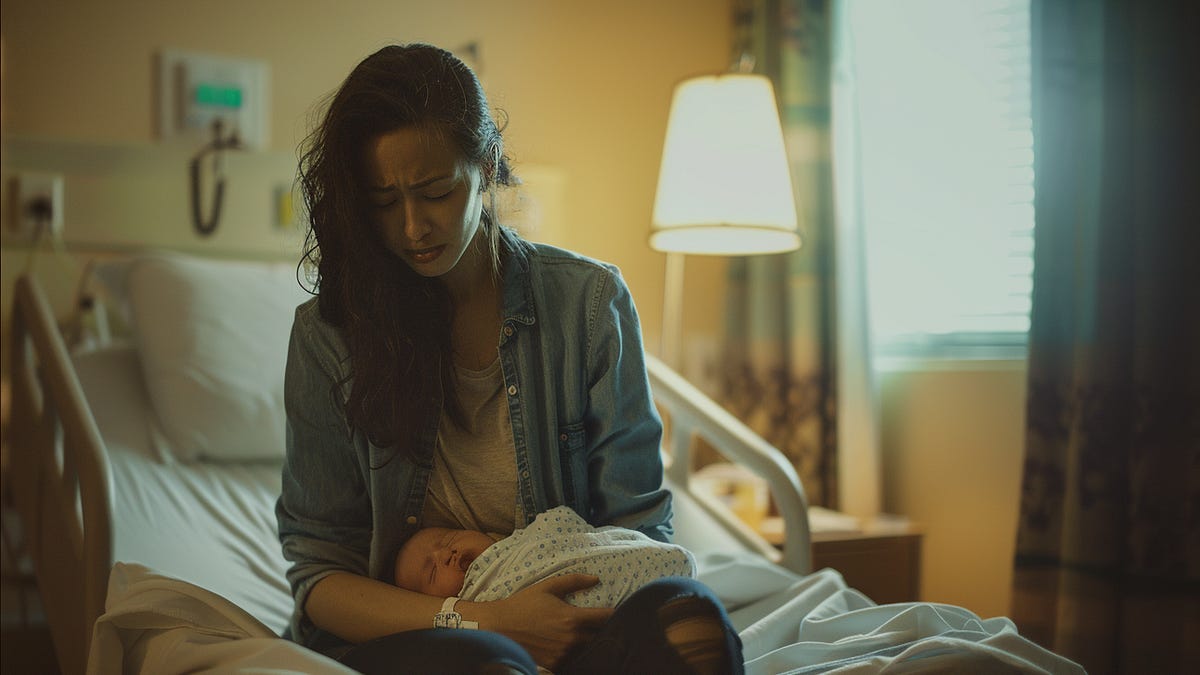
What Happens After Birth—The Path to Long-Term Treatment
Installment 6 of Labora Collective's Painful Bladder Syndrome Series - A Journey to Validation and Relief.

What Members Get
The Labora Collective — a unified content + community ecosystem built for reproductive health, justice, and survival.

Proximity Is Not Protection
On Marco Rubio, the Racial Draft, and the Dangerous Delusion of Adjacency

Membership
What you get

Start Here
Welcome. The Labora Collective is a member-supported medical publishing and community platform focused on reproductive health, justice, and survival—built for people who need more than headlines, wellness platitudes, or generic “talk to …

Labora Rounds: The Innovation & Funding Brief
October 12-20, 2025

Join the Labora Collective
Three pillars. One mission. Reproductive justice for all.
Welcome to Doula's Corner
The Blueprint: Innovation for patient centered medicine is a Labora Collective Publication bringing you healthcare innovation transforming women’s health from Dr. Yamicia Connor, founder of Diosa Ara and creator of the Labora Collective.

Chapter 13: From Pain to Purpose
Transforming Personal Pain into a Purposeful Mission for Systemic Change in Healthcare

Chapter 5: The Devaluation of Black Life
Exploring the systemic devaluation of Black lives within the medical profession and its implications for patient care

Chapter 3: The Culture of "Human First"
Examining the Paradox of “Human First” in a Flawed Healthcare System

The Moment Everything Changed: Why Violence Against Women Is More Urgent Than Ever
Addressing the Urgent Crisis of Violence Against Women Across Diverse Communities

Issue 9: The Heart of Pleasure
How Emotional Safety Enables Physical Response

The Gender Divide: From Misogyny to Mobilization—The Global Stakes of 2025
While the United States once helped shape the international consensus around gender equality, it has increasingly become both a battleground and a broker in the rise of a global anti-gender movement.
Ten Rules for Liberals Who Want to Actually Win: A Messaging Manifesto 📢
How to Build a Coalition That Can Finish What Reconstruction Started

The Gender Divide: Why Power Still Punishes Women in Public Life
Women's Health: Empowered Care, Informed Choices delivers evidence-based guidance on obstetrical and gynecological care, focusing on medications, clinical recommendations, reproductive justice, and maternal health outcomes.

The Gender Divide: How the Global Economy Exploits Women’s Labor
Labor, Wealth, and the Gendered Economy 💵

The Gender Divide: Global Fault Lines in Reproductive Freedom
The state of maternal health worldwide reflects how societies value women’s lives—not just rhetorically, but in concrete investment, infrastructure, and political will.

A Mother’s Fever Vigil
An Introduction

The Gender Divide: Who Controls the Female Body—and at What Cost?
Reproductive Autonomy and the Politics of the Body

Why We Don’t Block People?
People sometimes ask, “Why don’t you just block them?”

The Gender Divide: Rights on Paper, Control in Practice
When we talk about women’s legal rights, we are referring to the foundational protections and entitlements that enable autonomy and participation in society.

The Gender Divide: Are Women’s Rights Being Rolled Back Globally?
For centuries, women around the world have organized, advocated, and resisted to secure greater autonomy, equality, and dignity.

Part 1: Breaking the Silence—Understanding Substance Use in Pregnancy
Series: More Than One Life: Navigating Substance Use Disorder in Pregnancy

Introducing the Diosa Ara Team: Celebrating Community, Leadership, and Impact
Introducing the Inspiring Team Behind Diosa Ara: Champions of Storytelling and Reproductive Justice

🚨 Diosa Ara Is More Than Headlines: It’s the Future of Women’s Health
Dr. Yamicia Connor outlines a comprehensive strategy for enhancing women's health and reproductive justice through actionable content, community support.

Black Maternal Mental Health Week
Your Go-To Resource Guide

🟥 States That Invalidate or Override Advance Directives During Pregnancy
As of the most recent national review (based on statutes, not case law), the following 12 states have laws that explicitly void a pregnant person’s advance directive:

Sex Is Political. Always Has Been.
If it feels like sex is getting harder to talk about, you're not imagining it.

Embracing Joy: A Pathway to Connection and Liberation in Women's Health
Women's Health: Empowered Care, Informed Choices delivers evidence-based guidance on obstetrical and gynecological care, focusing on medications, clinical recommendations, reproductive justice, and maternal health outcomes.

This Should Never Have Happened
What the case of Adriana Smith reveals about medicine, law, and the silent dangers pregnant women still face

Let’s Build Together: A New Conversation on Sexuality & Parenting
It’s okay to turn off the news.

Who Is Yamicia Connor—and Why Your Support Matters?
💖 Thank You for Believing Before the World Caught On

Lactation Consultants vs. Pediatricians: Who Should You See for Breastfeeding Help?
Breastfeeding isn’t just a way to feed our babies; it’s an act loaded with emotion, cultural significance, and sometimes, sheer struggle.

Birth Control in Uncertain Times: Why You Shouldn’t Wait Another Day
Women's Health: Empowered Care, Informed Choices delivers evidence-based guidance on obstetrical and gynecological care, focusing on medications, clinical recommendations, reproductive justice, and maternal health outcomes.

When Your Water Breaks Early: What Happens Next?
You’re just over six months pregnant.

Postpartum Belly Binding: Tradition or Science?
Women's Health: Empowered Care, Informed Choices delivers evidence-based guidance on obstetrical and gynecological care, focusing on medications, clinical recommendations, reproductive justice, and maternal health outcomes.

Listening to the Unheard: The Critical Importance of Fetal Movement Awareness
Introduction: The Silent Tragedy of Stillbirth

Advocating for Yourself in the Healthcare System: A Survival Guide
Women's Health: Empowered Care, Informed Choices delivers evidence-based guidance on obstetrical and gynecological care, focusing on medications, clinical recommendations, reproductive justice, and maternal health outcomes.

Black Americans Will Suffer, but White America Is at Risk of Losing Its Very Soul
In these uncertain times, we all feel fear—fear for our future, for our families, for our financial security.

We Lost the Message. Now It’s Time to Change the Strategy
Let’s be honest with ourselves: we’ve lost.

🚨 The Reality of Giving Birth in a Crisis—What You Need to Know 🚨
🏥 Hospitals are closing, doctors are leaving, and restrictions are increasing.

Pregnant & Over 30? These 10 Tests Help Keep You & Your Baby Healthy
Pregnancy is an exciting journey, but as you get older, your risks shift.

🚨 What If You Need Emergency Pregnancy Care—But Can’t Get It?
🚨 What If You Need Emergency Pregnancy Care—But Can’t Get It?
Introducing In Her Name: Exposing the Cost of Control
Hi everyone,

The Imperative of Embracing Our Power: Reflections on Health Equity, Social Justice, and Resilience
Women's Health: Empowered Care, Informed Choices delivers evidence-based guidance on obstetrical and gynecological care, focusing on medications, clinical recommendations, reproductive justice, and maternal health outcomes.

How to Prepare for an Emergency with an Infant
Women's Health: Empowered Care, Informed Choices delivers evidence-based guidance on obstetrical and gynecological care, focusing on medications, clinical recommendations, reproductive justice, and maternal health outcomes.

The Crisis of Preterm Birth in Black Women – And Why It’s Getting Worse
Women's Health: Empowered Care, Informed Choices delivers evidence-based guidance on obstetrical and gynecological care, focusing on medications, clinical recommendations, reproductive justice, and maternal health outcomes.

🚨 Diabetes in Pregnancy: What You NEED to Know to Reduce Your C-Section Risk
Women's Health: Empowered Care, Informed Choices delivers evidence-based guidance on obstetrical and gynecological care, focusing on medications, clinical recommendations, reproductive justice, and maternal health outcomes.

Pre-Eclampsia Increases Your 10-Year Heart Disease Risk—What You Need to Know
Women's Health: Empowered Care, Informed Choices delivers evidence-based guidance on obstetrical and gynecological care, focusing on medications, clinical recommendations, reproductive justice, and maternal health outcomes.

10 Things Every Pregnant Person Needs to Do in Times of Political Unrest
“If things get worse, will you and your baby be safe?

Postpartum Love – Navigating Relationships After Baby
Women's Health: Empowered Care, Informed Choices delivers evidence-based guidance on obstetrical and gynecological care, focusing on medications, clinical recommendations, reproductive justice, and maternal health outcomes.

Mad at Elon? You Should Be Fucking Furious at the Entire System of Venture Capital and Private Equity That Created Him—And Countless Others Just Like Him.
Women's Health: Empowered Care, Informed Choices delivers evidence-based guidance on obstetrical and gynecological care, focusing on medications, clinical recommendations, reproductive justice, and maternal health outcomes.

Perinatal Infection Month: Protecting Moms & Babies from Hidden Threats
🚨 Did you know? Perinatal infections are a leading cause of complications for both moms and babies, yet many are preventable with the right care.

February is International Prenatal Infection Prevention Month: Safeguarding Mother and Child 🦠🩺🤰
Women's Health: Empowered Care, Informed Choices delivers evidence-based guidance on obstetrical and gynecological care, focusing on medications, clinical recommendations, reproductive justice, and maternal health outcomes.

Concerns
Women's Health: Empowered Care, Informed Choices delivers evidence-based guidance on obstetrical and gynecological care, focusing on medications, clinical recommendations, reproductive justice, and maternal health outcomes.

Diosa Ara Updates!
Women's Health: Empowered Care, Informed Choices delivers evidence-based guidance on obstetrical and gynecological care, focusing on medications, clinical recommendations, reproductive justice, and maternal health outcomes.

"Hard Life" ≠ Discrimination
Women's Health: Empowered Care, Informed Choices delivers evidence-based guidance on obstetrical and gynecological care, focusing on medications, clinical recommendations, reproductive justice, and maternal health outcomes.

The Silent Struggle: Cardiomyopathy, Severe Preeclampsia, and the Invisible Obstacles Moms Face
Imagine being a new mom—your body recovering from the seismic event of childbirth, your heart and blood pressure teetering on the edge of crisis—and the health system you turn to for help missing crucial warning signs.

Stepping Into True Leadership
Women's Health: Empowered Care, Informed Choices delivers evidence-based guidance on obstetrical and gynecological care, focusing on medications, clinical recommendations, reproductive justice, and maternal health outcomes.

The principled vote
Women's Health: Empowered Care, Informed Choices delivers evidence-based guidance on obstetrical and gynecological care, focusing on medications, clinical recommendations, reproductive justice, and maternal health outcomes.

From Corner Office to Cradle: Gearing Up for Motherhood After an Accomplished Career
Motherhood.

"Unnecessary Losses: How Many Black Women Must Die for Maternal Health Reforms?"
The loss of any mother is a profound tragedy that leaves an indelible mark on those left behind.

Diosa Ara: Revolutionizing Women's Health Through Science, Equity, and Empowerment
We are thrilled to announce the launch of Diosa Ara, a visionary consulting firm and concierge medical practice focused on women's health.