Open to read
108 Open The Cost of Control August 20, 2026

For thirty years the case for universal health care has been made as an act of goodness — for the poor, for the single mother, for the person who cannot pay. Dr. Connor argues that framing is why the argument keeps losing: it hands the veto to anyone uninterested in being good.
The Maternity Crash makes the case from the money instead. Homicide, not hemorrhage, is the leading killer of pregnant women. 508 hospitals have stopped delivering babies since 2011, leaving roughly two-thirds of US counties as obstetric care deserts. New obstetricians entering practice fell from 1,928 a year to 864. Medicaid pays for 41% of American births and is about to lose a trillion dollars. Meanwhile NICU admissions among term, normal-weight, singleton infants rose to 18,855 additional babies in a single year — about $1.3 billion, for babies who by every measure should not have needed intensive care.
The conclusion is not that the system is failing. It is that a system whose incentive is our suffering is working exactly as built, and cannot be reformed — only replaced.
Open In Her Name August 17, 2026

How Social Media Platforms Extract Wealth From the Communities That Built Them. By Dr. Yamicia Connor.
Open In Her Name August 17, 2026

Every claim has a number behind it. Reach decay, pay gaps, ad fraud, healthcare AI bias — the data.
Open In Her Name August 17, 2026

If the platforms will not distribute your work fairly, build your own distribution. Labora Collective. Yemaya. The Codex.
Open In Her Name August 17, 2026

I paid $80 to boost a post. The organic post outperformed it by 37%. I paid for audience degradation.
Open Where's My Money August 14, 2026

A twin-postpartum patient on day one, severe preeclampsia, the mag drip about to be stopped — and the counseling about a bottle-washing station that, in the absence of any system, is the system she will have.
Open Where's My Money August 13, 2026

The 6-week visit is the visit that catches the postpartum hypertension, the postpartum depression, the diabetes screen the patient cannot afford to miss. The 6-week visit is the visit the cancelled daycare slot takes back.
Open In Her Name August 12, 2026

Part 2 of Proximity and Awareness — the cases against Donald Trump that the courts have already adjudicated.
Open In Her Name August 12, 2026

Part 1 of Proximity and Awareness — a clinician's read on the documented record of Donald Trump's proximity to Jeffrey Epstein's operation.
Open In Her Name August 12, 2026

Names, dates, and the documented relationships of current U.S. officeholders to a convicted sex trafficker.
Open In Her Name August 12, 2026

Stop letting clinical terms become an escape route for abusing children.
Open In Her Name August 12, 2026

An honest accounting of the documented record — between facts too terrible to credit and conspiracies too easy to dismiss.
Open In Her Name August 12, 2026

What the January 2026 DOJ release actually showed — and what we keep refusing to look at.
Open In Her Name August 12, 2026

The Epstein case is not an aberration. It is the ordinary functioning of power when it does not fear consequences.
Open Where's My Money August 12, 2026

In the United States, childcare is treated as a private, luxury commodity rather than critical societal infrastructure. The economic reality is staggering: in a majority of states, the annual cost of infant center-based care exceeds the cost of in-state public college tuition, and frequently exceeds the cost of a median mortgage payment.
Open Where's My Money August 6, 2026

A signal tells you a woman was hurt. A briefing has to tell you exactly how — which dollar figure moved which decision in her body, and in what order, until an ordinary pregnancy became an emergency. So set the story aside for a moment and let me show you the machine, because the policy language is built to hide it. Coverage does not fail a woman all at once. It fails her along a chain, and every link in that chain is something I can name. Link one: the price the body actually feels. The number that governs my clinic is not the premium — the Signal already traced that shock. It is the deductible and the coinsurance line: the share of each individual study the patient pays at the moment she needs it. When the enhanced premium tax credits expired on December 31, 2025, that line jumped. In a single year the average ACA marketplace deductible jumped 37 percent — over a thousand dollars a head — to an all-time high of $3,786, the price of being herded into a bronze plan just to keep a premium within reach. You can watch the migration happen. In a single year the marketplace tilted toward its thinnest tier: bronze climbed from three in ten sign-ups to four in ten — 7.3 million enrollees becoming 9.2 million — while silver, the plan that actually carries cost-sharing help, dropped from 57 percent of the market to 43, the lowest share on record. Those subsidies were not a small adjustment. The American Rescue Plan stood them up in 2021; the Inflation Reduction Act kept them alive through 2025; between them they had driven premiums to zero for anyone living under 150 percent of the poverty line. With them gone, the average enrollee is set to pay more than 75 percent more out of pocket for the very same plan. Hold the deductible number, because it is the input to everything below. And understand what a deductible actually is in obstetric time: not a bill that arrives once, but a gate standing in front of every study, every lab, every visit, until it is met. A pregnancy is not one transaction — the recommended schedule is fourteen prenatal visits. A gate of that size means the opening months of prenatal care are, functionally, cash-pay, precisely the months in which the conditions that kill women later are supposed to be found. Link two: rational triage. No one in this chain behaves recklessly. Handed a deductible she cannot clear, a patient does exactly what a careful person does — she rations, and she rations by a specific logic: pay the copay you can see to avoid the bill you cannot, and cut the appointment whose absence you will not feel today . This is not a hypothesis about how patients behave. Asked what an extra thousand dollars in yearly health costs would force them to do, 67 percent of marketplace enrollees said the money would come straight out of the household — the groceries, the utilities, the basics of getting by. That is the household arithmetic arriving in my exam room. And the rule predicts, with unnerving accuracy, which piece of prenatal care disappears first. It is never the thing that hurts now. It is always the thing that protects her from a catastrophe she cannot yet feel coming. The care most likely to be cut is, by design, the care that was doing the most silent work. This is the part policy writing consistently gets wrong: it models the patient as someone who drops coverage. The likelier patient keeps the card and quietly stops using it — though dropping is happening too, with 2026 marketplace enrollment on track to drop 21.5 percent — an exodus from 22.3 million to about 17.5 million. Link three: the physiology of a missed scan. The first thing to go is almost always the fetal anatomy survey at eighteen to twenty-two weeks — the exam ACOG recommends for every pregnancy and the single most operationally important image in ordinary prenatal care. It is not a keepsake. It is a decision tree. It is where I find the congenital heart defect in time to move the delivery to a center that can operate on a newborn. It is where I find the open neural tube defect, the placenta previa, and the one that keeps obstetricians awake — place
Open Where's My Money July 31, 2026

A patient bounced between four clinics over six weeks, a beta-hCG that should have triggered a methotrexate order a month ago, and a Medicaid card that activated, finally, the week she arrived in the ED.
Open The Dossier: Bodies. Borders. Power. July 28, 2026

At the turn of the 20th century roughly half of U.S. births were attended by midwives. Between 1900 and 1930 a coordinated campaign drove them out of practice — and manufactured the maternity-care crisis of 2026.
Open Founders Notes July 26, 2026

Dr. Connor on raising a four-year-old who already knows who she is — and on what it costs a Black girl to keep that certainty in rooms built to take it from her.
Open Women's Health July 26, 2026
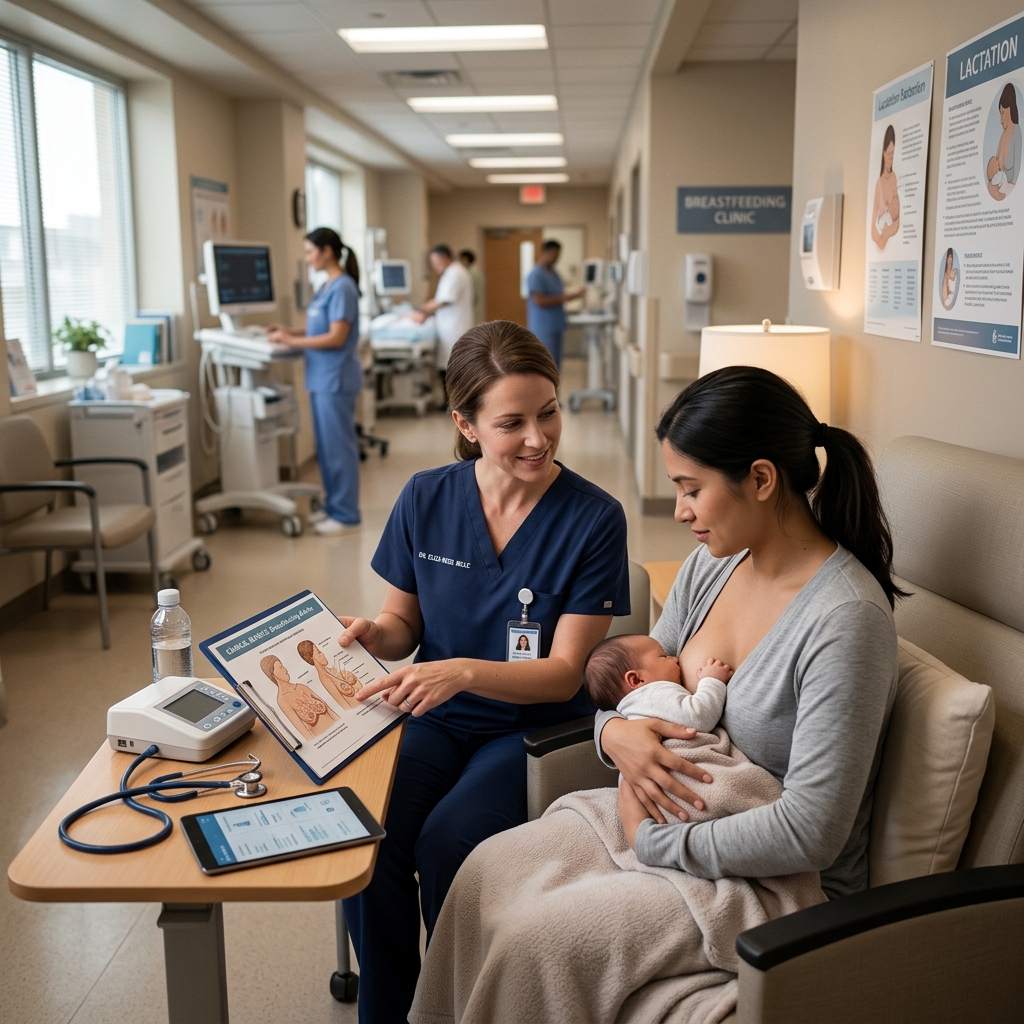
What every breastfeeding parent should know about mastitis — when it happens, why, what treatment really looks like, when to call your doctor, and what urgent care and ERs often miss.
Open Where's My Money July 23, 2026

A Black physician, in a city, with private doctors and good insurance, sitting on her own postpartum fever at one hundred and three degrees and telling herself she was just engorged — and what that hour, in retrospect, taught me about the patient I am discharging today.
The story I am telling is, for once, the story of a patient who is also the physician. The patient is me. The hospital I almost did not go into was not the hospital where I work, but it was a hospital where someone like me would have been received without trouble. The fever I almost sat with was one hundred and three. The thing I kept telling myself, for hours, was that I was probably just engorged.
The room, on the morning I am writing about, is the room I am discharging a different patient out of. She is a few days postpartum. Her blood pressures yesterday were good. She has someone with her. Her support system, on the chart, is the word strong. She has done the things the discharge sheet asks her to do. She has, in front of me, the look of a woman who is being told she gets to go home, and who is, at the same time, holding the small private grief that the easy part is now finished and the hard part starts in the parking lot. I have seen that look on the women I have discharged for a long time. I know it because I have worn it.
→ Read the full Viva Voce
Open Where's My Money July 23, 2026

For two generations, the public-health bargain was that income and education would buy a Black woman a safer pregnancy. In 2026, the bargain is being unwound — and the obstetric chart is the first place the unwinding shows.
The system took the protection that income and education were supposed to give Black women. Monday's Signal opened the first installment of The Economic Body: the deliberate dismantling of the structural rungs — affirmative action, corporate DEI, federal civilian employment, targeted homeownership lending — that the Black middle class climbed in the second half of the twentieth century. This Briefing is the clinical follow-on. It teaches the doctrine that ties an economic policy decision to a placenta: the Weathering Hypothesis, John Henryism, allostatic load. It walks the chart of a previously-low-risk patient — masters' degree, federal job, premium commercial insurance until last quarter — into a third-trimester preeclampsia diagnosis the standard risk-stratification tool would not have predicted a year ago. And it names the three Blueprint levers — concordance-care preservation, postpartum Medicaid extension, the protected-class federal-employment data integrity — that are still procedurally open while the economic floor is still being pulled.
In the public-health bargain we have taught residents for thirty years, education and income are protective. The Black-white maternal mortality gap is supposed to narrow as the income curve climbs. The data, in fact, does the opposite. The highest-income, highest-educated Black women in the United States experience severe maternal morbidity at rates higher than low-income white women without a high-school diploma. The bargain was never real. The bargain was the protective-effect paradox — and the paradox is a Briefing topic only when the woman in question still has the job. In 2026 the woman in question, increasingly, does not. The pregnant patient with a masters' degree, a federal civilian salary line that disappeared in the spring layoff, and a Medicaid card she did not have last year is the patient the Briefing is now writing for. Her allostatic load was already higher than the chart fields suggest. Her cortisol baseline, on the day she lost the job, became something the placenta would have to absorb. Her preeclampsia at twenty-eight weeks, in a pregnancy that the OB intake form classified as low-risk, is the clinical event the structural reversal produces — and the intake form does not have a field for it.
→ Read the full briefing
Open Where's My Money July 23, 2026

RESEARCH BRIEF: THE DESTRUCTION OF THE BLACK MIDDLE CLASS — MATERNAL HEALTH IS THE CANARY
In the United States, economic mobility has traditionally been viewed as the primary shield against adverse health outcomes. The standard narrative asserts that as income and education rise, mortality falls. However, when we analyze the data on Black women in America, this foundational rule of public health completely disintegrates.
Extensive epidemiological research demonstrates that high-income, highly educated Black women (those with advanced degrees) suffer from higher rates of severe maternal morbidity and maternal mortality than low-income white women who have not graduated from high school. Income does not protect Black women from dying in childbirth.
This paradox is explained by three overlapping physiological and sociological frameworks: 1. The Weathering Hypothesis: Developed by Dr. Arline Geronimus, this framework proves that the chronic, daily stress of navigating systemic racism and structural inequality causes premature biological aging at the cellular level. 2. Allostatic Load: The measurable physiological "wear and tear" on the body's cardiovascular and neuroendocrine systems from chronic stress exposure, leading to chronically elevated cortisol and baseline hypertension. 3. John Henryism: The prolonged, high-effort active coping strategy utilized by Black Americans to overcome structural barriers. While it drives socioeconomic success (the creation of the Black middle class), it requires a devastating physiological toll, frequently resulting in severe cardiovascular disease.
Between 2024 and 2026, the economic policies and legal frameworks that historically supported the growth and stabilization of the Black middle class have been systematically dismantled.
Following the Supreme Court's ruling against affirmative action, the subsequent legal environment in 2025 and 2026 saw the aggressive dismantling of corporate Diversity, Equity, and Inclusion (DEI) initiatives, the rollback of federal contracting mandates for minority-owned businesses, and the termination of targeted homeownership lending programs. Furthermore, massive reductions in the federal civilian workforce—a sector that has historically provided the most stable, equitable employment and robust health benefits for the Black middle class—have disproportionately targeted Black professionals.
This is not merely an economic contraction; it is the deliberate erasure of wealth-building mechanisms. The racial wealth gap—where the median white family holds roughly eight to ten times the wealth of the median Black family—is rapidly widening as these stabilizing policies are revoked. Because Black middle-class wealth is often fragile and highly dependent on active income rather than inherited generational capital, these economic shocks hit the community with devastating speed.
→ Read the full Signal
Open Know Your Rights July 17, 2026

A pregnant woman arrives at an Idaho ER at nineteen weeks, membranes ruptured, hours from sepsis. Federal law says stabilize her; Idaho law says a physician who ends the pregnancy to do so can face five years in prison, unless she is already dying. In Moyle v. United States (2024) the Supreme Court dismissed the case and resolved nothing. St. Luke's airlifted six patients out of state in three months. Demand HHS reissue and defend the EMTALA reproductive-emergency guidance.
Receipt #7, Bring the Bolt Cutters.
Open Viva Voce July 10, 2026

A Fourth of July essay on the American promise — and the one thing no dominant people in history has ever done: share power freely. What real greatness would actually cost, and why the case for it is overwhelming.
Open Know Your Rights July 10, 2026

Anthony Comstock died in 1915. The 1873 vice law he wrote, still on the books as Title 18 Sections 1461-1462, is being positioned as the mechanism to ban abortion pills nationwide, without Congress and without the Supreme Court. Project 2025 calls for the DOJ to enforce it against mailed mifepristone; a December 2022 OLC memo is the only thing holding it back. Demand your senators pass the Stop Comstock Act.
Receipt #6, Bring the Bolt Cutters.
Open The Dossier: Bodies. Borders. Power. July 6, 2026

Why a project that counts the present is reaching all the way back. The Long War — a history of 150 years of American reproductive control.
Open Know Your Rights July 3, 2026

Your prenatal chart is no longer private. Neither is your miscarriage record, your fertility consult, or your pharmacy log.
In Purl v. HHS, Judge Matthew Kacsmaryk vacated nationwide the 2024 HIPAA rule that kept reproductive-care records out of an out-of-state prosecutor's subpoena. The rule lived about six months. The default HIPAA framework, which permits disclosure for law-enforcement purposes, is back in force.
The floor is gone. Demand your senator support the My Body, My Data Act; if you are a physician or administrator, audit your EHR vendor's default disclosure response to out-of-state subpoenas; if you are a patient, ask in writing what your provider's policy is.
Receipt #5, Bring the Bolt Cutters.
Open The Dossier: Bodies. Borders. Power. June 29, 2026

The 1873 law that criminalized contraception was never repealed — and in 2026 it is being loaded again.
Open Know Your Rights June 26, 2026

I'm an OB/GYN. I prescribe mifepristone. Under Louisiana law, the conduct that makes me a physician makes Dr. Margaret Carpenter a felon. In 2025 a Louisiana grand jury indicted Carpenter — a New York physician — for a telehealth consult that was legal where she practiced. Louisiana signed an extradition warrant; New York's governor refused it, "not now, not ever." It's the first cross-state criminal prosecution of an abortion provider since Dobbs, and it's the template — built to test, and gut, the shield laws of 22 states and D.C. The next warrant has my name on it.
Open Know Your Rights June 19, 2026

Texas didn't pass an abortion ban in 2025 — it passed a bounty law, and the architecture is the point. HB 7 takes the SB 8 mechanism (civil bounty in lieu of criminal enforcement, so the state can't be sued for an unconstitutional ban) and extends it across state lines. Any private citizen may sue anyone — a New York telehealth doctor, a California pharmacy, a FedEx driver, a friend with pills in her purse — who supplies abortion medication to a Texas resident. Minimum damages: $100,000. No cap. No standing requirement. It lands on the 49.6% of Texas counties that are already maternity-care deserts.
Open The Dossier: Bodies. Borders. Power. June 16, 2026

We already built the thing. Tricare for All: the universal system America already built and refuses to scale. Essay Three of What Is Knowable.
Open Know Your Rights June 12, 2026

In 2024, Black women died from pregnancy-related causes at 44.8 per 100,000 — a 3.15-fold gap over white women, and the only maternal-mortality rate that didn't improve. The federal government spent the next year making the next number harder to produce. Executive Order 14151 and the HHS communications-pause memo triggered the largest scrub of federal health data in modern history: 203 datasets dark, 3,000+ CDC pages altered, PRAMS shut down mid-survey and its team laid off. Without the surveillance, Black mothers still die. Nobody is permitted to count why.
Open The Dossier: Bodies. Borders. Power. June 10, 2026

The medical track. What the laws and rulings actually do to bodies. Essay Two of What Is Knowable.
Open The Dossier: Bodies. Borders. Power. June 3, 2026

The philosophy track. The natural-law tradition the religious right buried. Essay One of What Is Knowable.
Open Know Your Rights May 29, 2026

Pastor Dale Partridge is touring a book called 19 Reasons to Repeal the 19th Amendment. He isn't hiding it — and the bill that does what the book calls for is already in the Senate. The SAVE Act (H.R. 22) requires documentary proof of citizenship to register to vote: a birth certificate matched to an ID with the same name, which rules out roughly 69 million married women who took their husband's name. It doesn't have to bar women from voting; it only has to make voting expensive enough in time, paperwork, and money that enough drop off the rolls to swing elections. The cruelty is the design.
Open Make Health Great Again May 6, 2026
It is 2026. They took it. The four phases of how American women's health was deliberately dismantled. Texas maternal mortality up 56% — white women up 95%. The ban states are killing the women who voted for the bans.
Open Brought to You by Racism April 29, 2026

The word "intellectual" doesn't belong to them. For decades the American conservative intellectual project has been opportunism dressed up in footnotes — and when the packaging became inconvenient, every guardrail Buckley built came down in a single election cycle.
Open Women's Health March 26, 2026

Capacity accounting, feedback as dominance behavior, and why protecting your bandwidth is the most mission-critical decision you make.
Open Women's Health March 10, 2026

The Pregnancy Risk Assessment Monitoring System has tracked maternal health data since 1987. Federal funding expires April 2026. Here’s what’s at stake.
Open Women's Health March 5, 2026

On Power, Structural Racism, and the Real Price of Building While Black and Female in Medicine
Open Women's Health March 3, 2026
Installment 6 of Labora Collective's Painful Bladder Syndrome Series - A Journey to Validation and Relief.
Open Women's Health March 3, 2026
Installment 5 of Labora Collective's Painful Bladder Syndrome Series - A Journey to Validation and Relief.
Open Women's Health March 3, 2026

Installment 2 of Labora Collective's Painful Bladder Syndrome Series - A Journey to Validation and Relief.
Open Women's Health March 3, 2026

Installment 4 of Labora Collective's Painful Bladder Syndrome Series - A Journey to Validation and Relief.
Open In Her Name February 18, 2026

The Labora Collective — a unified content + community ecosystem built for reproductive health, justice, and survival.
Open In Her Name February 17, 2026

On Marco Rubio, the Racial Draft, and the Dangerous Delusion of Adjacency
Open In Her Name February 12, 2026
 Read the full story →
 Open In Her Name January 29, 2026

Welcome. The Labora Collective is a member-supported medical publishing and community platform focused on reproductive health, justice, and survival—built for people who need more than headlines, wellness platitudes, or generic “talk to …
Open Women's Health November 30, 2025
 Read the full story →
 Open Women's Health November 23, 2025
Three pillars. One mission. Reproductive justice for all.
Open Women's Health November 23, 2025
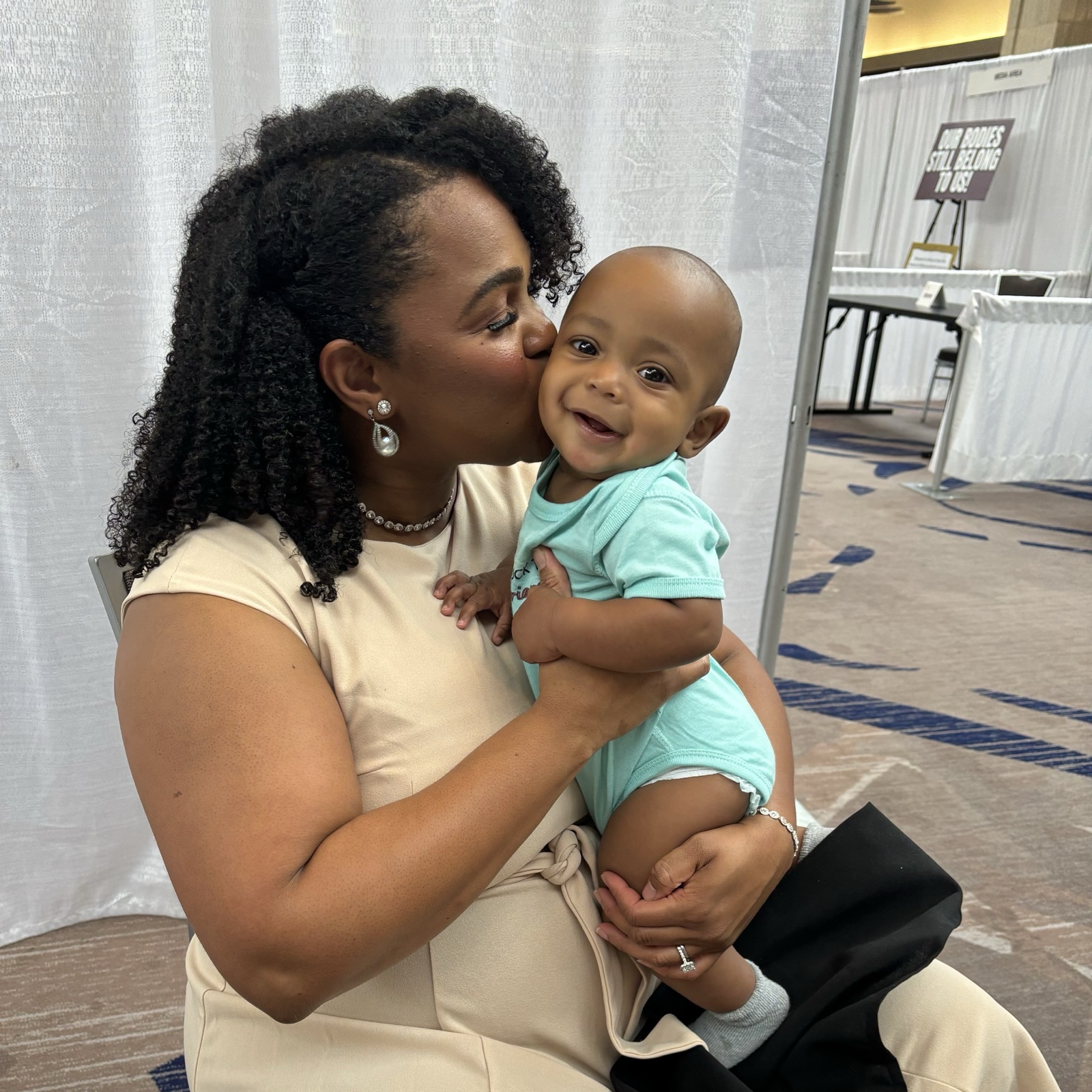
The Blueprint: Innovation for patient centered medicine is a Labora Collective Publication bringing you healthcare innovation transforming women’s health from Dr. Yamicia Connor, founder of Diosa Ara and creator of the Labora Collective.
Open Women's Health November 12, 2025

Transforming Personal Pain into a Purposeful Mission for Systemic Change in Healthcare
Open Women's Health October 24, 2025

Exploring the systemic devaluation of Black lives within the medical profession and its implications for patient care
Open Women's Health October 20, 2025

Examining the Paradox of “Human First” in a Flawed Healthcare System
Open Women's Health October 7, 2025

Addressing the Urgent Crisis of Violence Against Women Across Diverse Communities
Open Women's Health September 26, 2025

How Emotional Safety Enables Physical Response
Open Women's Health September 25, 2025

While the United States once helped shape the international consensus around gender equality, it has increasingly become both a battleground and a broker in the rise of a global anti-gender movement.
Open Women's Health September 19, 2025
How to Build a Coalition That Can Finish What Reconstruction Started
Open In Her Name September 18, 2025

Women's Health: Empowered Care, Informed Choices delivers evidence-based guidance on obstetrical and gynecological care, focusing on medications, clinical recommendations, reproductive justice, and maternal health outcomes.
Open Women's Health September 16, 2025

Labor, Wealth, and the Gendered Economy 💵
Open Women's Health September 11, 2025
The state of maternal health worldwide reflects how societies value women’s lives—not just rhetorically, but in concrete investment, infrastructure, and political will.
Open Women's Health September 7, 2025
 Read the full story →
 Open Women's Health September 4, 2025
Reproductive Autonomy and the Politics of the Body
Open Women's Health September 1, 2025

People sometimes ask, “Why don’t you just block them?”
Open Women's Health August 28, 2025

When we talk about women’s legal rights, we are referring to the foundational protections and entitlements that enable autonomy and participation in society.
Open Women's Health August 21, 2025
Series: More Than One Life: Navigating Substance Use Disorder in Pregnancy
Open In Her Name August 21, 2025

For centuries, women around the world have organized, advocated, and resisted to secure greater autonomy, equality, and dignity.
Open Women's Health August 19, 2025

Introducing the Inspiring Team Behind Diosa Ara: Champions of Storytelling and Reproductive Justice
Open Women's Health August 15, 2025

Dr. Yamicia Connor outlines a comprehensive strategy for enhancing women's health and reproductive justice through actionable content, community support.
Open Women's Health July 25, 2025
Your Go-To Resource Guide
Open Women's Health July 24, 2025

As of the most recent national review (based on statutes, not case law), the following 12 states have laws that explicitly void a pregnant person’s advance directive:
Open Women's Health July 21, 2025

If it feels like sex is getting harder to talk about, you're not imagining it.
Open Women's Health July 10, 2025

Women's Health: Empowered Care, Informed Choices delivers evidence-based guidance on obstetrical and gynecological care, focusing on medications, clinical recommendations, reproductive justice, and maternal health outcomes.
Open Women's Health July 2, 2025

What the case of Adriana Smith reveals about medicine, law, and the silent dangers pregnant women still face
Open Women's Health June 23, 2025

It’s okay to turn off the news.
Open Women's Health June 18, 2025

💖 Thank You for Believing Before the World Caught On
Open Women's Health May 6, 2025
Breastfeeding isn’t just a way to feed our babies; it’s an act loaded with emotion, cultural significance, and sometimes, sheer struggle.
Open Women's Health April 24, 2025

Women's Health: Empowered Care, Informed Choices delivers evidence-based guidance on obstetrical and gynecological care, focusing on medications, clinical recommendations, reproductive justice, and maternal health outcomes.
Open Women's Health April 17, 2025

You’re just over six months pregnant.
Open Women's Health April 16, 2025

Women's Health: Empowered Care, Informed Choices delivers evidence-based guidance on obstetrical and gynecological care, focusing on medications, clinical recommendations, reproductive justice, and maternal health outcomes.
Open Women's Health April 10, 2025
Introduction: The Silent Tragedy of Stillbirth
Open Women's Health April 3, 2025

Women's Health: Empowered Care, Informed Choices delivers evidence-based guidance on obstetrical and gynecological care, focusing on medications, clinical recommendations, reproductive justice, and maternal health outcomes.
Open Women's Health March 20, 2025

In these uncertain times, we all feel fear—fear for our future, for our families, for our financial security.
Open Women's Health March 18, 2025

Let’s be honest with ourselves: we’ve lost.
Open Women's Health March 14, 2025

🏥 Hospitals are closing, doctors are leaving, and restrictions are increasing.
Open Women's Health March 11, 2025

Pregnancy is an exciting journey, but as you get older, your risks shift.
Open Women's Health March 6, 2025

🚨 What If You Need Emergency Pregnancy Care—But Can’t Get It?
Open Women's Health March 4, 2025

Women's Health: Empowered Care, Informed Choices delivers evidence-based guidance on obstetrical and gynecological care, focusing on medications, clinical recommendations, reproductive justice, and maternal health outcomes.
Open In Her Name March 4, 2025
 Read the full story →
 Open Women's Health February 27, 2025

Women's Health: Empowered Care, Informed Choices delivers evidence-based guidance on obstetrical and gynecological care, focusing on medications, clinical recommendations, reproductive justice, and maternal health outcomes.
Open Women's Health February 21, 2025
Women's Health: Empowered Care, Informed Choices delivers evidence-based guidance on obstetrical and gynecological care, focusing on medications, clinical recommendations, reproductive justice, and maternal health outcomes.
Open Women's Health February 20, 2025

Women's Health: Empowered Care, Informed Choices delivers evidence-based guidance on obstetrical and gynecological care, focusing on medications, clinical recommendations, reproductive justice, and maternal health outcomes.
Open Women's Health February 19, 2025

Women's Health: Empowered Care, Informed Choices delivers evidence-based guidance on obstetrical and gynecological care, focusing on medications, clinical recommendations, reproductive justice, and maternal health outcomes.
Open Women's Health February 17, 2025

“If things get worse, will you and your baby be safe?
Open Women's Health February 10, 2025

Women's Health: Empowered Care, Informed Choices delivers evidence-based guidance on obstetrical and gynecological care, focusing on medications, clinical recommendations, reproductive justice, and maternal health outcomes.
Open Women's Health February 6, 2025

Women's Health: Empowered Care, Informed Choices delivers evidence-based guidance on obstetrical and gynecological care, focusing on medications, clinical recommendations, reproductive justice, and maternal health outcomes.
Open Women's Health February 5, 2025

🚨 Did you know? Perinatal infections are a leading cause of complications for both moms and babies, yet many are preventable with the right care.
Open Women's Health February 4, 2025

Women's Health: Empowered Care, Informed Choices delivers evidence-based guidance on obstetrical and gynecological care, focusing on medications, clinical recommendations, reproductive justice, and maternal health outcomes.
Open Women's Health February 2, 2025

Women's Health: Empowered Care, Informed Choices delivers evidence-based guidance on obstetrical and gynecological care, focusing on medications, clinical recommendations, reproductive justice, and maternal health outcomes.
Open Women's Health February 1, 2025

Women's Health: Empowered Care, Informed Choices delivers evidence-based guidance on obstetrical and gynecological care, focusing on medications, clinical recommendations, reproductive justice, and maternal health outcomes.
Open Women's Health January 24, 2025

Women's Health: Empowered Care, Informed Choices delivers evidence-based guidance on obstetrical and gynecological care, focusing on medications, clinical recommendations, reproductive justice, and maternal health outcomes.
Open Women's Health January 8, 2025

Imagine being a new mom—your body recovering from the seismic event of childbirth, your heart and blood pressure teetering on the edge of crisis—and the health system you turn to for help missing crucial warning signs.
Open Women's Health November 22, 2024

Women's Health: Empowered Care, Informed Choices delivers evidence-based guidance on obstetrical and gynecological care, focusing on medications, clinical recommendations, reproductive justice, and maternal health outcomes.
Open Women's Health October 27, 2024

Women's Health: Empowered Care, Informed Choices delivers evidence-based guidance on obstetrical and gynecological care, focusing on medications, clinical recommendations, reproductive justice, and maternal health outcomes.
Open Women's Health July 31, 2023
 Read the full story →
 Open Women's Health July 27, 2023

The loss of any mother is a profound tragedy that leaves an indelible mark on those left behind.
Open Women's Health July 26, 2023

We are thrilled to announce the launch of Diosa Ara, a visionary consulting firm and concierge medical practice focused on women's health.
Behind the door
38 Members essay August 24, 2026
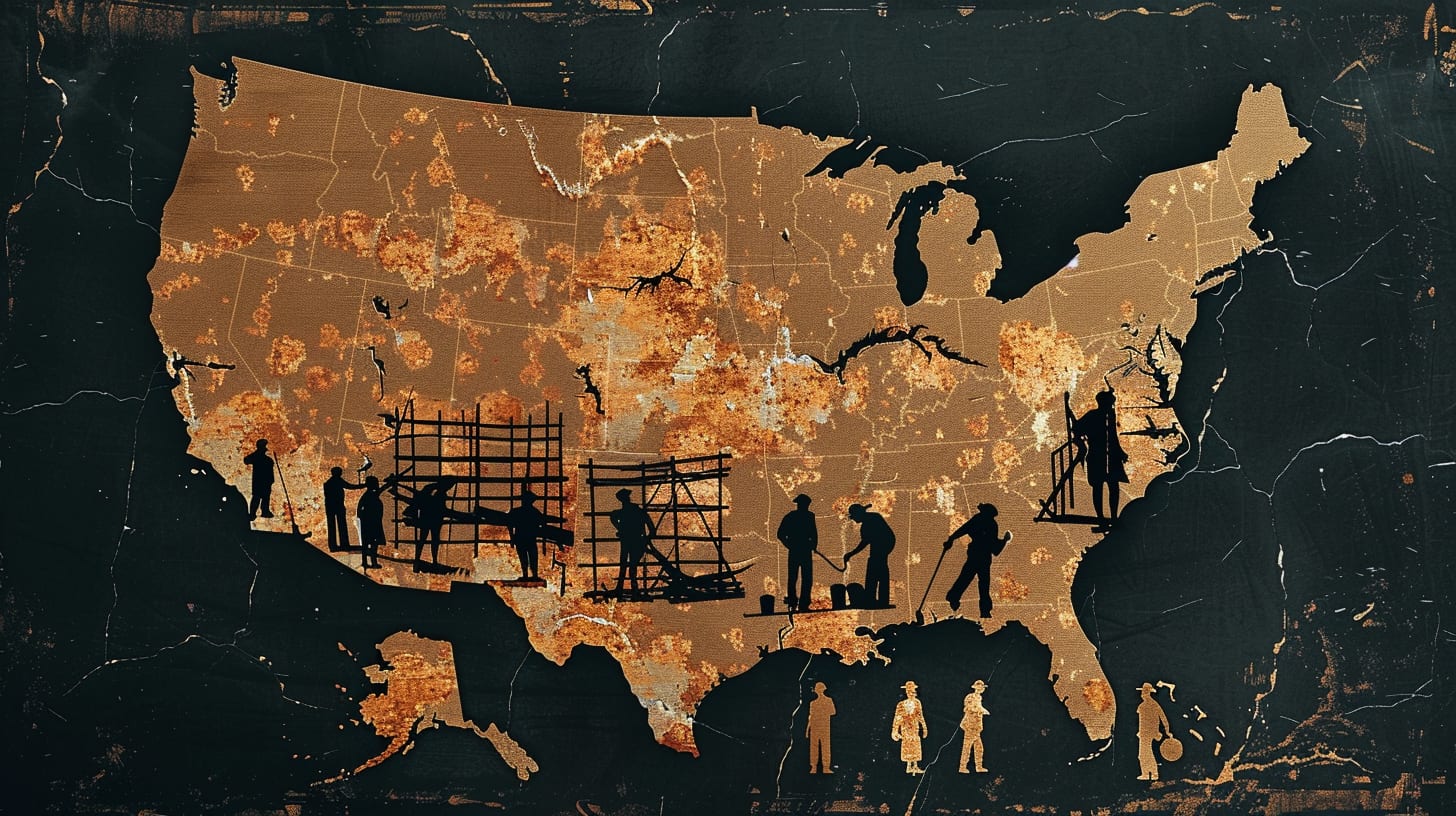
A country addicted to racial and economic supremacy, at odds with itself because immigration exposes the conflict. We have an immigration problem because immigrants solve a more fundamental one: our addiction to low-wage labor.
The rest is for members.
Sign in to read → Members essay August 24, 2026

We built this together — all of us — and they are putting it up for sale for a smaller, more violent version of itself. This is why Black people are so tired. Not from the hatred. From the obviousness of it.
The rest is for members.
Sign in to read → Members essay August 24, 2026

The farm-raid pause that revealed everything. A $150 billion enforcement bill with zero E-Verify. Private-prison stocks up 42% on election night. The border deal killed to preserve the crisis.
The rest is for members.
Sign in to read → Members essay August 24, 2026

144 years. Chinese, Irish, Italian, Mexican, Central American — the same play, different cast. The Bracero Program as America’s confession. 11 employers prosecuted a year, against 125,000 workers.
The rest is for members.
Sign in to read → Members essay August 24, 2026
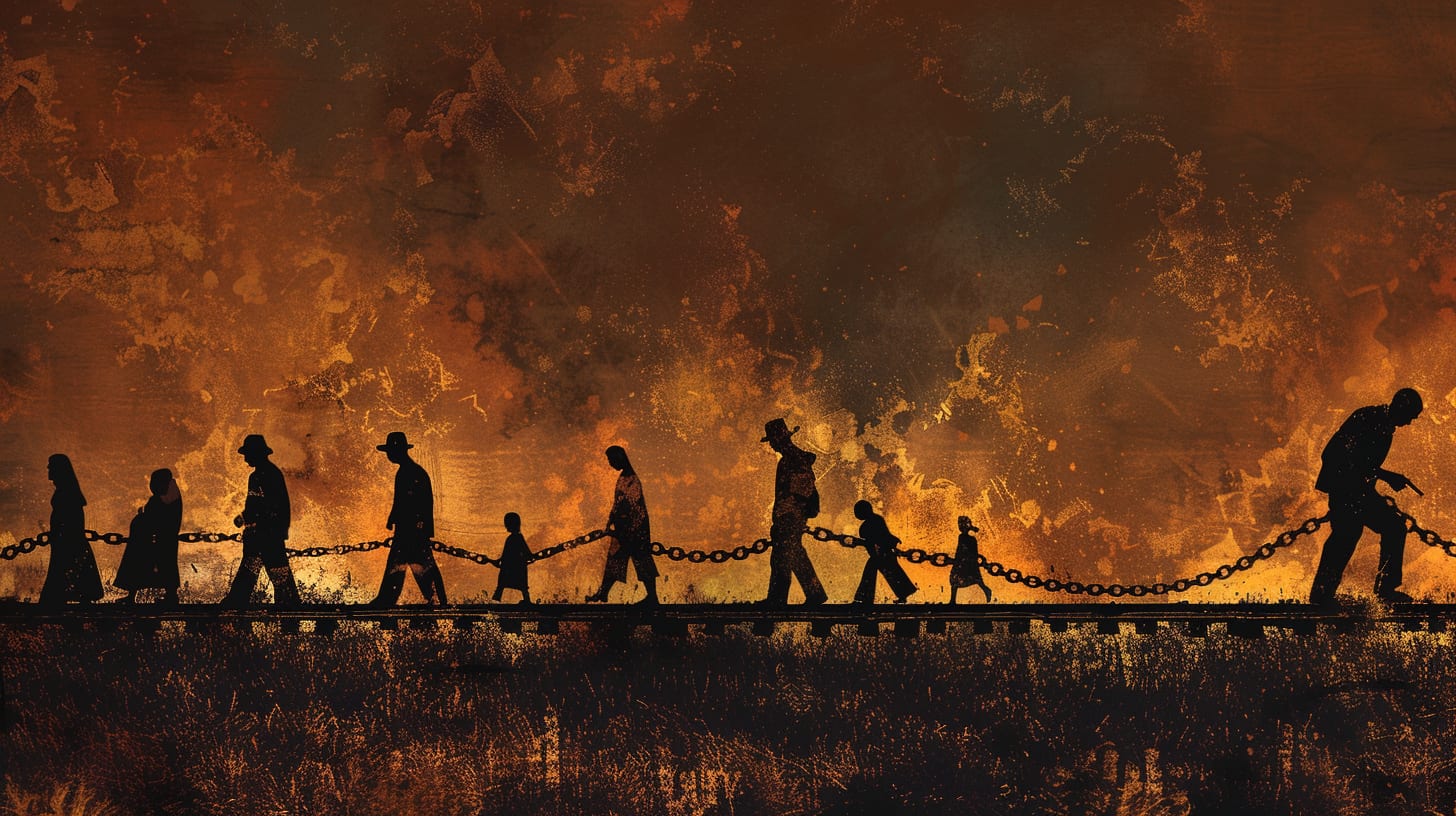
Slavery is not a metaphor for immigration. It is immigration policy — the first imported labor force. No wages, no citizenship, no path to permanence. And what happened when the paperwork changed but the system did not.
The rest is for members.
Sign in to read → Members essay August 24, 2026
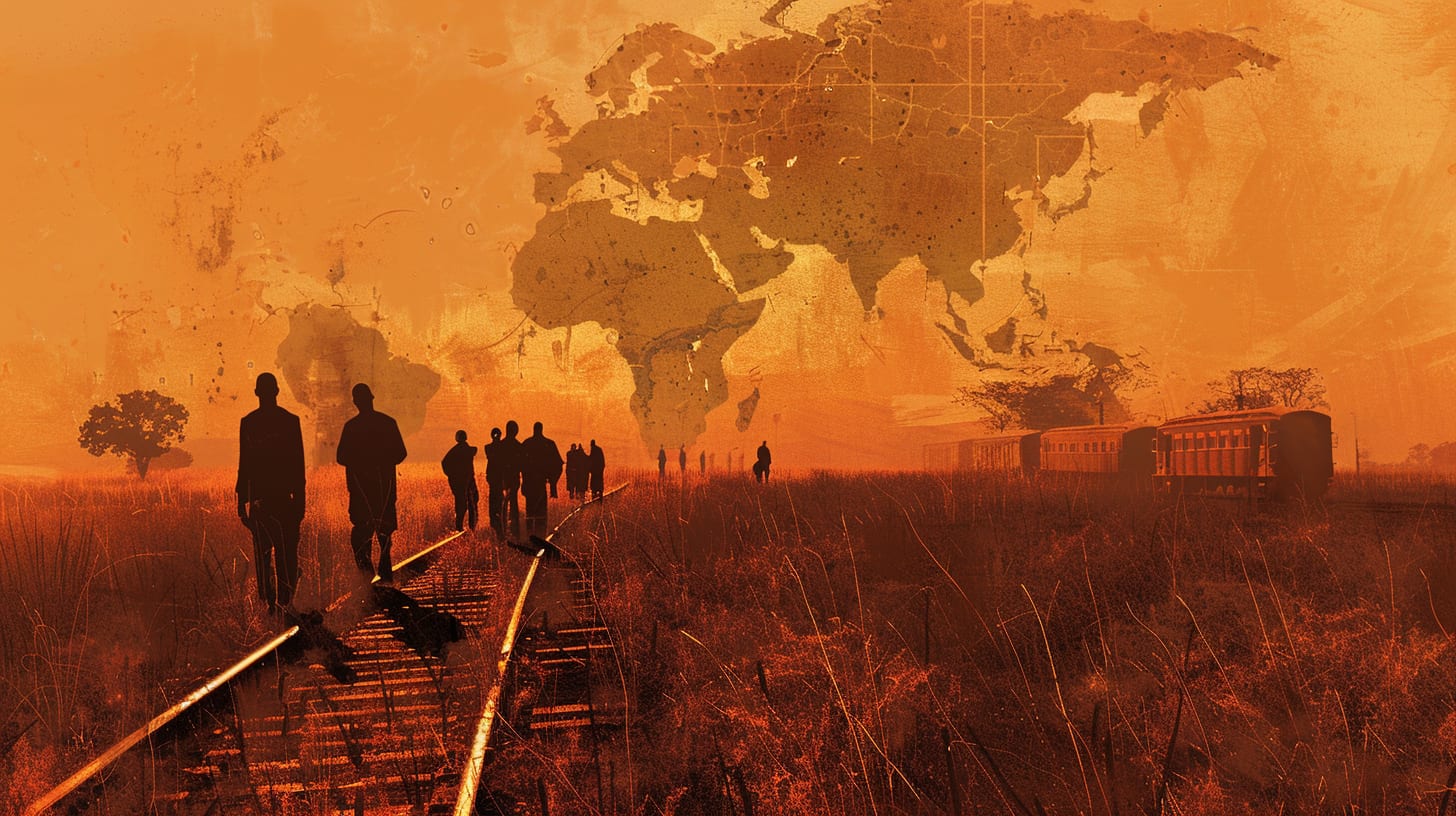
Would you trust someone you believed inferior with your children, your home, your food, your nation? No. So explain to me why you did — and why you built an entire economy on the answer.
The rest is for members.
Sign in to read → Free account essay August 6, 2026

Day two postpartum. Blood pressures still creeping, no safe place to go home to — and a discharge I held back by one day, against the unit's own clock.
The rest is for free account.
Read the full story → Free account article August 4, 2026

When the address is unstable, the placenta does what placentas do under chronic cortisol load. The path runs from eviction filing to preterm birth, and the discharge sheet has no row for it.
The rest is for free account.
Read the full story → Free account article August 4, 2026

Housing is healthcare. A stable, secure place to live is a prerequisite for a healthy pregnancy — and this patient's most dangerous exposure never made it onto the monitor.
The rest is for free account.
Read the full story → Members essay July 26, 2026

Uterine cancer is the most common gynecologic malignancy in the US and its incidence is rising. Black women face the worst outcomes — and the screening standards, treatment gaps and trial representation behind that are decisions, not biology.
The rest is for members.
Sign in to read → Free account article July 24, 2026

In LePage v. Center for Reproductive Medicine (Feb 2024), the Alabama Supreme Court held that frozen embryos are children under the state's Wrongful Death of a Minor Act. Within days, three of Alabama's largest IVF providers halted treatment — the ruling protected no embryo and shut down the medicine that creates them.
The rest is for free account.
Read the full story → Free account article July 23, 2026

The ACA made maternity and newborn care an essential benefit every marketplace plan had to cover, and barred insurers from turning women away. This is the patient who did everything right — and the morning the subsidies expired.
The rest is for free account.
Read the full story → Members essay July 9, 2026

Nine voices across three continents, writing from a holiday call shift. The founder on what it costs to build a still self-funded company committed to changing women's health, and eight teammates on what the work means to them — and on why doing the right thing still matters when the world no longer rewards it.
The rest is for members.
Sign in to read → Members essay July 8, 2026

A finite, ownable collection that fills as you complete deep, goal-mapped content — turning the time you spend learning into visible proof of what you know. Collector psychology, not gamification: each Codex completes, and then the next one begins.
The rest is for members.
Sign in to read → Members essay July 8, 2026

There is no ready-made archetype that makes a Black woman MD/PhD founder building emergency obstetrical infrastructure legible to funders and partners — so people improvise unflattering ones. Radical transparency is the answer: an asset that cannot be described cannot be valued.
The rest is for members.
Sign in to read → Members essay July 8, 2026

People ask me all the time — why isn’t healthcare different? Why is there no innovation? Why do we keep doing things the same way? The honest answer is because it’s hard. It’s really, really hard. It’s hard and incredibly expensive. It’s time-consuming and stressful. It carries enormous liability and a very high risk of failure.
The rest is for members.
Sign in to read → Members essay July 8, 2026

Balance as a daily negotiation rather than a destination. A year of leading a team, mothering, and building while carrying the extra weight the world assigns Black women — and why clarity is kindness, boundaries are structure, and nothing lasting gets built from constant depletion.
The rest is for members.
Sign in to read → Members essay July 8, 2026

A behind-the-scenes note on the Labora Collective rebuild: over the next few days, pages, fonts, and designs may shift across our publications as we unify the visual identity and reorganize the ecosystem. This isn’t an error — it’s a transition, and instead of going silent we chose to keep publishing.
The rest is for members.
Sign in to read → Members essay July 8, 2026

Why Dr. Yamicia Connor founded Diosa Ara, and how post-Dobbs restrictions — from the Zurawski ruling in Texas to the EMTALA fight in Idaho — are endangering pregnant women. The medical case that abortion access is essential to safe pregnancy care.
The rest is for members.
Sign in to read → Free account essay June 26, 2026

A fourth cesarean. A failed spinal converted to general anesthesia. A thin lower-uterine segment and five hundred milliliters of blood. Three people in the room who knew exactly what to do.
The rest is for free account.
Read the full story → Free account article June 25, 2026

The OB-GYN who would have practiced in Idaho in 2032 did not match into an Idaho residency in 2024. A single calendar year of state law produced that fact — and 116 rural L&D closures run on the same arithmetic.
The rest is for free account.
Read the full story → Free account article June 24, 2026

A maternal health system does not run on funding and buildings. It runs on specialists — and legal risk and criminalization are driving them out of ban states faster than anyone is replacing them.
The rest is for free account.
Read the full story → Free account essay June 19, 2026

A fifth pregnancy, four children at home, a bladder prolapse that will need surgical repair, chronic hypertension — and a Medicaid coverage window that closes before the surgery can be scheduled.
The rest is for free account.
Read the full story → Free account article June 18, 2026

Medicaid covers forty-one percent of all U.S. births, sixty-four percent of births to Black mothers, and forty-seven percent of rural births. The OBBBA takes nine hundred billion dollars out of it.
The rest is for free account.
Read the full story → Free account article June 17, 2026

Medicaid pays for roughly forty percent of all births in this country. Nobody is repealing it — procedural unenrollment is hollowing it out one renewal form at a time.
The rest is for free account.
Read the full story → Free account essay June 12, 2026

Three nights admitted for acute heavy bleeding, an IV estrogen drip with a partial response, a transfusion — and a discharge prescription that in 2026 is not really a prescription anymore. It is a question.
The rest is for free account.
Read the full story → Free account article June 11, 2026

For forty years the corporate pharmacy infrastructure absorbed the medication-access risk of American obstetrics. Post-Dobbs, three chains have decided that risk now belongs to the patient.
The rest is for free account.
Read the full story → Free account article June 10, 2026

The retail pharmacy is the last node in the reproductive healthcare system — the one standing between a valid prescription and the medication in your hand. The chains are becoming the new gatekeepers.
The rest is for free account.
Read the full story → Free account essay June 5, 2026

Twenty-nine weeks, blood pressures in the two-hundreds, vessels so constricted no one could place a line — and the one drug whose entire point is that it can be reached anywhere in the world was not in the building.
The rest is for free account.
Read the full story → Free account article June 4, 2026

When the obstetric code cart is empty, the patient who would have survived a postpartum hemorrhage twenty years ago does not survive one today. The empty cart is not an accident.
The rest is for free account.
Read the full story → Free account article June 3, 2026

Obstetric drug shortages are creating life-threatening gaps in hemorrhage and seizure protocols. Oxytocin, misoprostol, magnesium sulfate—cheap generics that prevent maternal death—are vanishing from hospital code carts while regulators track national output, not bedside reality.
The rest is for free account.
Read the full story → Free account essay May 29, 2026

In obstetrics, surveillance is the intervention. When we lose PRAMS, we lose the structural context of the patient in the room. The watching is the care.
The rest is for free account.
Read the full story → Free account essay May 28, 2026

How PRAMS is being killed without ever being killed: funding intact, paperwork in motion, the people removed. The timeline from January 2025 to May 2026, the parallel erasures across the federal building, and how Labora is surveilling maternal health without it.
The rest is for free account.
Read the full story → Free account article May 28, 2026

Why would Congress defund the only system that asks mothers why they did not get care? Because the data creates liability. PRAMS tracks the upstream failures, and defunding it severs the causal link.
The rest is for free account.
Read the full story → Free account article May 27, 2026

The CDC PRAMS team has been on administrative leave for thirteen months; the 2023 dataset was finished and never released; the state grants expired April 30. Action through omission — the same playbook as Title X, applied to America’s only maternal-experience surveillance system.
The rest is for free account.
Read the full story → Free account essay May 22, 2026

The morning after a postpartum tubal ligation, a 42-year-old patient explains she chose permanence because she no longer trusts that contraception will be reliably available. The federal sterilization rule written to protect women from coercion now helps push them toward it. The decision was hers; the context was not.
The rest is for free account.
Read the full story → Free account article May 21, 2026
Title X — the only federal family-planning program — is being dissolved without a repeal vote: the administering office cut from ~50 staff to one, the FY2027 mission rewritten from contraception to "fertility awareness," and funding routed toward Crisis Pregnancy Centers. A clinical case opens the pattern; the House markup on June 5 is the next inflection point.
The rest is for free account.
Read the full story → Free account article May 21, 2026
Administrative starvation: how you dismantle a program without repealing it — hollow out the office, squeeze the money, reinterpret who qualifies. Title X is the case study, the 2019 gag rule is the receipt, and three statutory counters exist that nobody has pulled.
The rest is for free account.
Read the full story →